
Anchor text analysis before your mix becomes a risk
Anchors are picked one deal at a time. Anchor text analysis in SEOENV uses the Anchor Text Heatmap to show the overall mix per client, so you can rebalance before the next batch.
Free plan: 20 links, 2 clients, 2 projects. Paid plans from $29/mo.
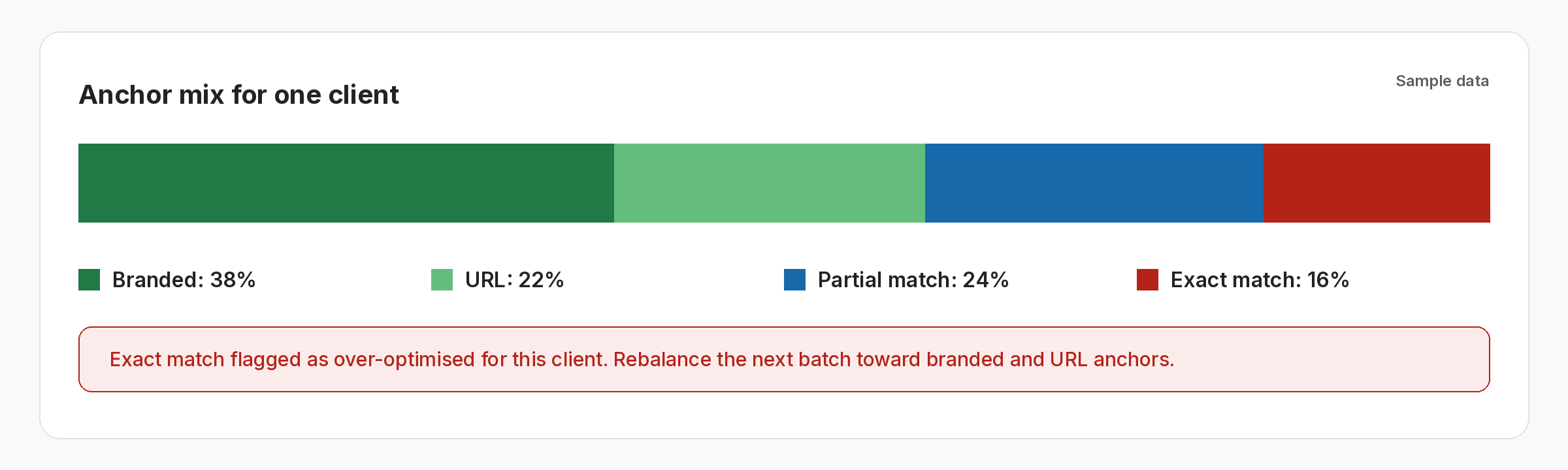
Every anchor looks fine on its own.
The risk only shows when you see them together.
One partner wants the exact keyword, the next one too, and a vendor uses it by default. Each choice looks reasonable. Across fifty links the profile starts to look engineered, and nobody notices because the anchors are spread across tabs, partners and months.
Search engines read anchor text as a description of the page it points to. Natural profiles are varied because different writers describe the same page in different ways. When most anchors repeat the same commercial phrase, the profile looks arranged rather than earned. The fix is rarely dramatic: it is choosing the next anchors with the existing mix in view, which is exactly what a spreadsheet makes hard.
Four types, in plain words.
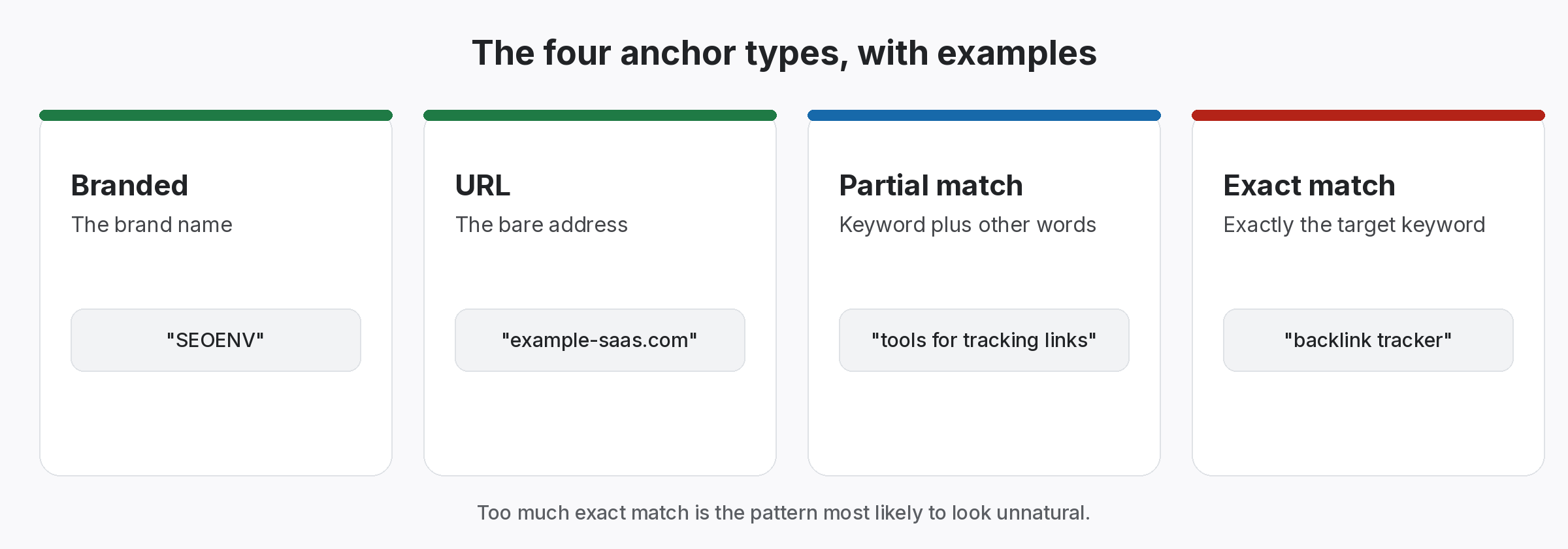
Branded, URL, partial match and exact match.
Branded anchors use the brand name, URL anchors use the address, partial match mixes the keyword with other words, and exact match is the keyword alone. A natural profile usually leans on the first two.
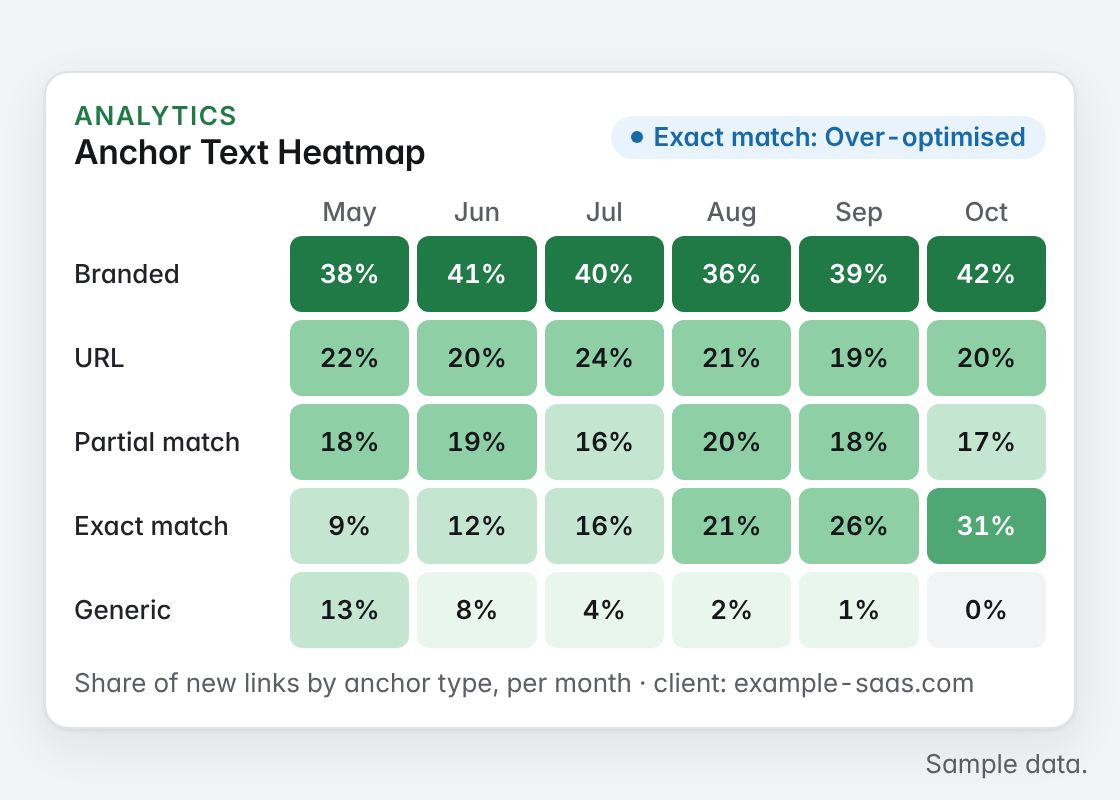
The whole mix, per client.
Grouped by anchor type and month, with a risk score.
The heatmap groups every anchor pointing at a client and scores the risk. Over-optimised exact-match anchors are flagged so you can steer the next batch toward branded and URL anchors.
How to rebalance an anchor profile.
See the mix. Then pick the next anchor.
Rebalance before it becomes a pattern.
The tools behind anchor analysis.
Every feature listed here is live in the app today.
There is no official ideal anchor ratio, and we will not pretend there is one. What the heatmap gives you is the pattern, so the decision about the next anchor is made with the whole profile in view.
The SEOENV team · Last updated 14 October 2026
Who uses this.
Where this fits in SEOENV.
Anchor text analysis for the links you build
Anchor text analysis starts with what the anchor should do. For instance, Google’s guidance on writing good anchor text favours descriptive, concise text. However, many keyword-rich anchors in guest posts or paid links can look manipulative.
As a result, check anchors as links are logged in guest post tracking and paid link tracking. Also see link building reports and the backlink manager overview.
